

Smoke coming back into the room from your wood burner or open fire: what it usually is
September 17, 2026
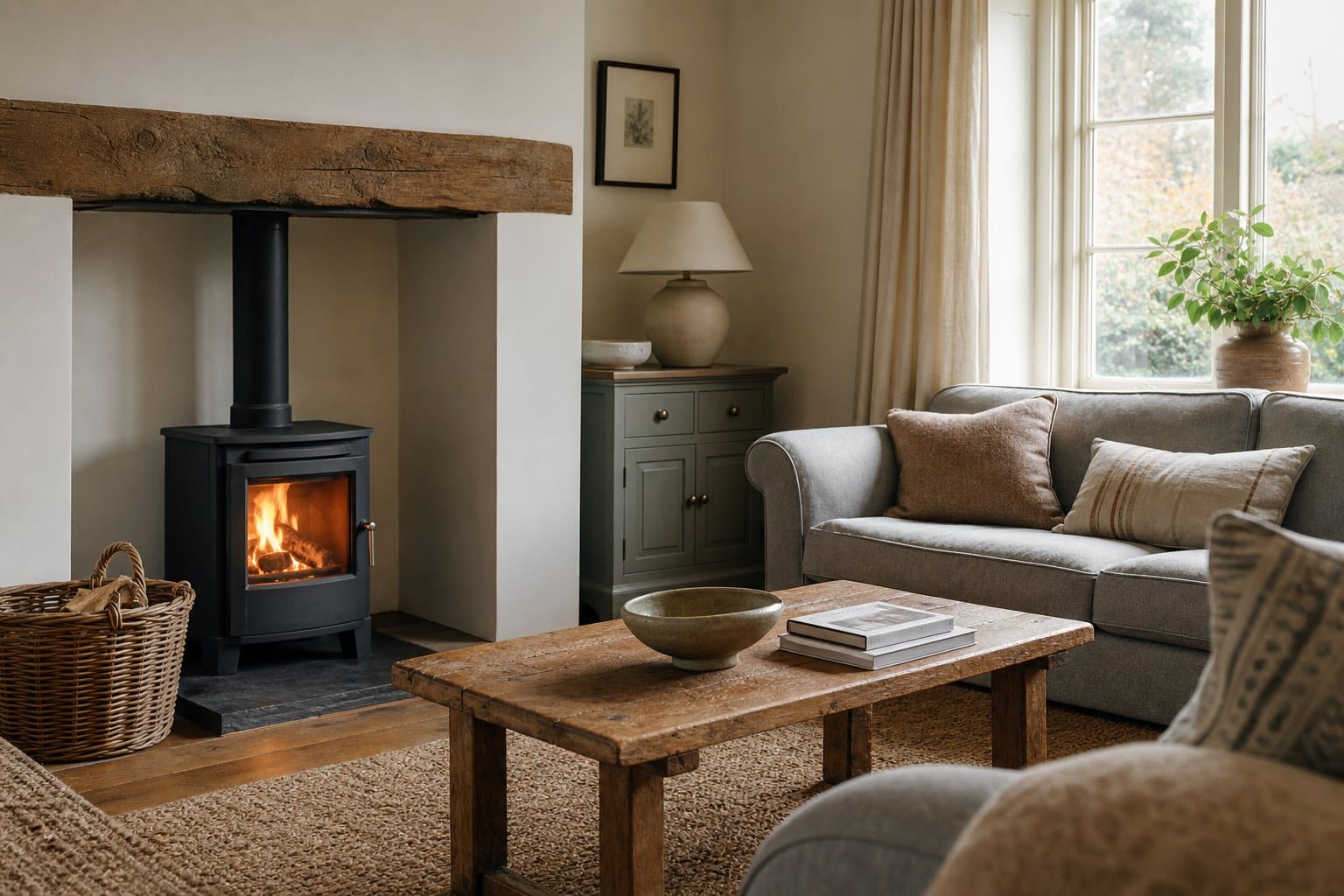
The first cold evening of autumn is when this happens. The fire has not been lit since March, you get it going, and instead of drawing up the chimney the smoke rolls out over the top of the stove door or out of the open grate into the room. Around Bury St Edmunds and across Suffolk we get the same run of calls every September and October, and the cause is nearly always one of six things. Here they are in the order we usually find them, with what you can check yourself before anyone comes out.
1. The flue is cold
A chimney only pulls when the air inside it is warmer than the air in the room. After a summer with no fires the brickwork is cold, sometimes colder than the room, and the first smoke has nothing lifting it. This is the most common cause by a long way and it is not a fault.
Check: hold a rolled, lit piece of newspaper up inside the flue for a minute before you light the fire, or on a stove leave the door cracked open for the first few minutes with the air control fully open. If the smoke problem fades once the fire is established, this was it.
2. Something is blocking the flue
Over a quiet summer a jackdaw can fill a chimney with sticks in a fortnight. Leaves, a collapsed cowl, or a soot fall from the sides of an unswept flue do the same job. A blocked flue gives you smoke from the very first minute and it does not improve as the fire warms up.
Check: with the fire out and cold, shine a torch up from the fireplace. On a stove, open the baffle and look. Sticks, feathers or a pile of debris on the smoke shelf mean stop and book a nest removal, not a sweep on its own. If you had a fire in spring and there was no problem then, a summer nest is the first suspect.
3. The room is starved of air
A fire pulls air from the room and sends it up the chimney. If the room cannot replace that air the chimney cannot draw. Modern double glazing, draught proofing, and especially a kitchen or bathroom extractor fan running in the same air space all compete with the flue. Extractors win.
Check: open a window an inch and see if the smoke clears. If it does, the fix is a permanent air vent for the room, and switching the extractor off when the fire is lit in the meantime.
4. The wood is wet
Wood with a high moisture content burns cool and slow and makes far more smoke than dry wood. A cool, smoky fire does not warm the flue enough to draw properly, so the smoke sits in the room. It also lays tar inside the chimney, which is a separate problem for later.
Check: a moisture meter costs a few pounds. Anything above 20 percent is too wet to burn cleanly. Logs that hiss, or that show black glass on the stove door within an hour, are usually the reason.
5. The stove itself
On a stove, a warped or shifted baffle plate, a perished door rope seal, or a firebox door that no longer closes square will all let smoke escape into the room instead of up the flue. These are cheap parts and easy to check.
Check: with the stove cold, close the door on a strip of paper. If the paper pulls out easily the rope seal has gone. Look up inside for a baffle that has dropped or moved.
6. Wind and the chimney top
A chimney that ends below the ridge line, or one with a nearby tree or taller building, can suffer from downdraught in certain winds. The smoke comes back only on windy days and only from particular directions. This is the least common cause and the one you cannot fix from inside the house.
Check: if it only happens in a north easterly, or only when the wind is strong, note the conditions. A sweep can advise on a cowl once the flue has been looked at, but rule out the other five first.
When it is a sweep job
If the flue was last swept more than a year ago, or the fire has been used heavily since, book a sweep before you go any further. A sweep clears the soot and tar that narrow the flue, and it is also when a blockage or a nest is found and dealt with. If you burn wood most evenings through the winter the guidance from HETAS is twice a year.
One last thing: if you have a stove or an open fire and no carbon monoxide alarm in the room, buy one this week. Smoke you can see is the warning you get. Carbon monoxide gives you none.
If you are inside 30 miles of Bury St Edmunds and would rather someone looked at it, send the form with your postcode or ring Karen on 01284 365 010.